
 Bahasa Indonesia
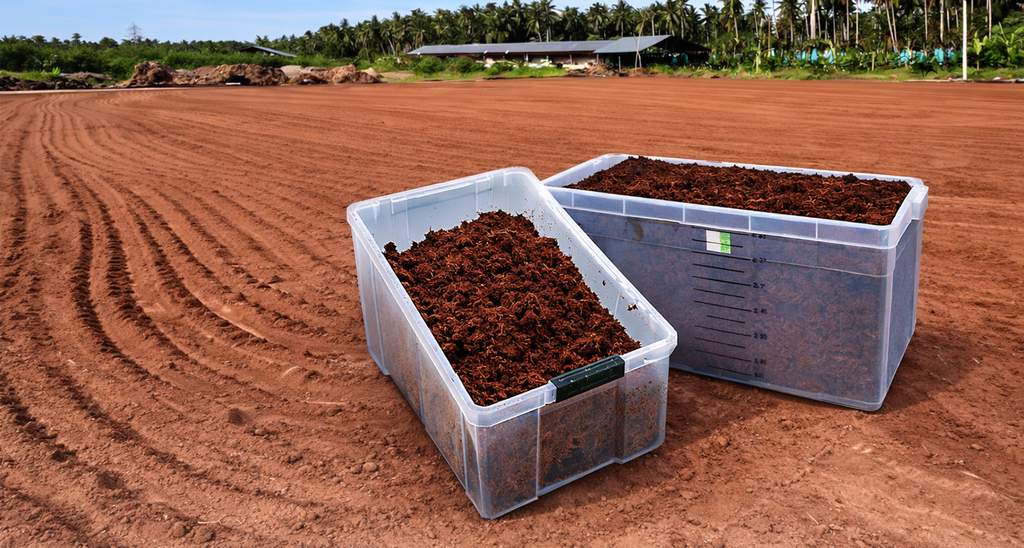
Cocopeat has become one of the most popular growing media in modern agriculture, especially in greenhouse systems, hydroponics, and intensive horticulture. This medium is known for its excellent water retention, optimal aeration, and eco-friendly nature.
However, the quality of cocopeat plays a crucial role in cultivation success. One important parameter that often receives attention is Electrical Conductivity (EC). If the EC of cocopeat is too high, plants can experience various serious growth problems.
This article discusses in detail the causes, impacts, and solutions to high EC in cocopeat.
What Is EC in Cocopeat?
EC, or Electrical Conductivity, is an indicator that shows the amount of dissolved salts in the growing medium. EC values are usually expressed in mS/cm (milliSiemens per centimeter).
In cocopeat, EC is influenced by the natural mineral salt content from coconut fibers as well as the production process.
In general, the ideal EC range for cocopeat used in cultivation is:
0.5 – 1.0 mS/cm
This value may vary slightly depending on the type of plant and cultivation system used.
If the EC value is too high, the growing medium will contain excessive salts that can disrupt the plant’s nutrient balance.
Causes of High EC in Cocopeat
Several factors can cause high EC levels in cocopeat:
1. Inadequate Washing Process
Coconut fibers naturally contain salts, especially if the raw materials come from coastal areas.
If cocopeat does not go through proper washing and processing, the salt content will remain high in the final product.
2. Lack of Buffering Process
Buffering is an important step in cocopeat production to stabilize ions such as sodium and potassium.
Without proper buffering, cocopeat may contain ions that disrupt plant nutrient balance.
3. Poor Quality Washing Water
The water used during production greatly affects EC values. Water with high mineral content can increase the EC of the medium.
4. Improper Storage Conditions
Storing cocopeat in humid environments or exposing it to mineral-rich water can also increase EC levels.
Effects of High EC on Plants
If cocopeat has excessively high EC, several negative impacts may occur:
1. Impaired Water Uptake
High salt levels increase osmotic pressure in the growing medium, making it difficult for plant roots to absorb water.
Plants may show symptoms such as:
-
Wilting even when the medium is wet
-
Slow growth
-
Yellowing leaves
2. Nutrient Imbalance
High EC can disrupt the balance of nutrients absorbed by plants.
Excess ions such as sodium and potassium can inhibit the uptake of essential nutrients like calcium and magnesium.
3. Root System Damage
Excess salts can stress plant roots and hinder root development.
In extreme conditions, roots may suffer damage or necrosis.
4. Reduced Plant Productivity
In intensive systems such as greenhouses or hydroponics, growing media quality is critical for yield.
High EC in cocopeat can result in:
-
Suboptimal plant growth
-
Reduced fruit or flower production
-
Low seedling success rates
How to Reduce EC in Cocopeat
To ensure cocopeat is safe for use as a growing medium, the following steps can be taken:
✔ Proper Washing Process
Cocopeat should undergo repeated washing to remove dissolved salts. This process is typically done using clean water with a good drainage system.
✔ Buffering Process
Buffering is carried out using calcium solutions to replace unwanted sodium and potassium ions.
This process improves cocopeat quality and stabilizes EC levels.
✔ Regular Quality Testing
Routine EC testing is essential to ensure the product meets quality standards before use or distribution.
✔ Choosing High-Quality Cocopeat
Cocopeat produced with standardized processes generally has more stable quality and EC levels suitable for modern agriculture.
Cocopeat Quality Standards for Modern Agriculture
In the global market, high-quality cocopeat generally has the following characteristics:
-
Low and stable EC
-
Balanced pH
-
High water absorption capacity
-
Consistent fiber structure
-
Free from contaminants
These standards are especially important for export requirements and commercial greenhouse applications.
Conclusion
EC in cocopeat is a key indicator in determining the quality of coconut fiber-based growing media. If the EC is too high, plants may experience water uptake issues, nutrient imbalances, and reduced productivity.
Through proper production processes such as washing, buffering, and strict quality testing, cocopeat can become a stable, efficient, and sustainable growing medium for modern agriculture.
Choosing cocopeat with guaranteed quality standards is an essential step to ensure long-term cultivation success.